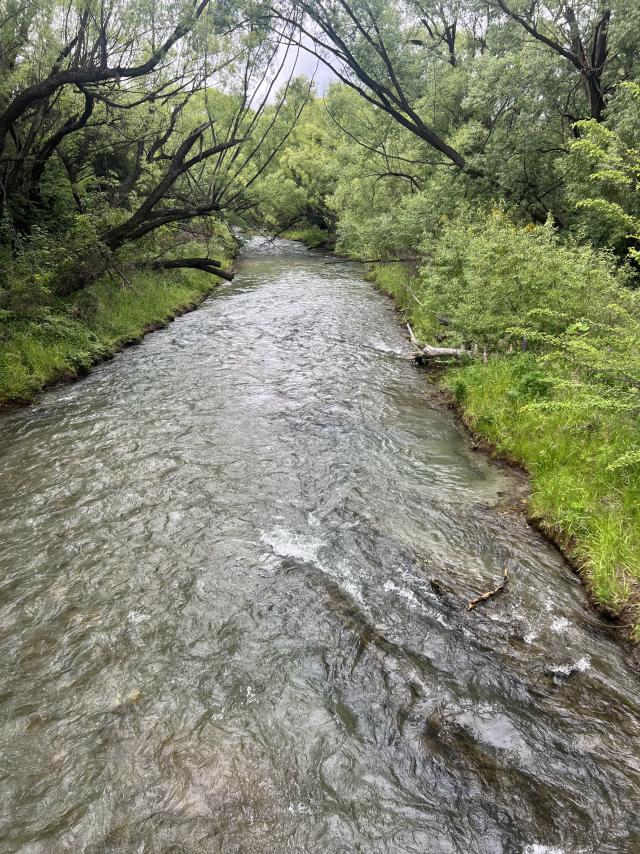
This week’s Over the Fence comes to you from Arrowtown, New Zealand, where I am visiting my sister and brother-in-law. I hope you are a enjoying a break and got to spend some quality time with your family over Christmas.
Why do farmers complain about the weather?
Yep, farmers are always whining about rain – either too much or too little.
How does one keep a farmer happy? And when should you mention the ‘r’ word?
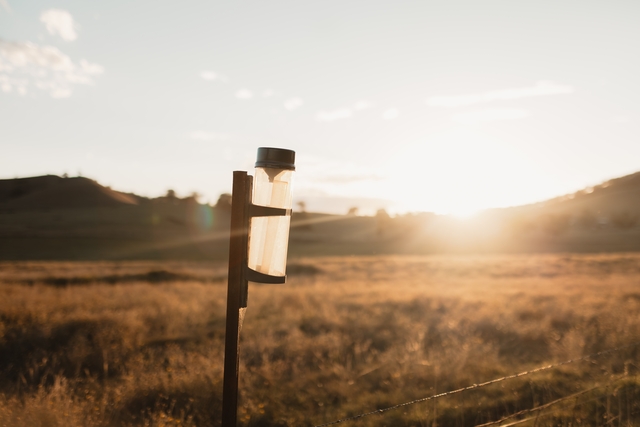
To be honest, it is always nice to talk about rain, and in the words of country singer Luke Bryan, ‘rain is a good thing’.
John Gladigau, from Loxton in the Mallee, has completed a concise summary of when it rains and how you should react to it. Think of it as the beginner’s guide to rainfall for non- farmers.
John is a 2007 Nuffield scholar who studied collaborative farming. He is a grower director and current chairman of Grain Producers SA, and he also works part-time as Creative Director and Farmer Advocate for ifarmwell – a mental health awareness group for farmers.
John’s other claim to fame is his work as a playwright, including the well-known theatre production Kick Off Ya Boots, which tackles some big rural issues including drought, succession planning and communication. The dinner movie is now touring rural SA.
You may also know John as the creator of the Harvesting the Crop and Planting the Crop Facebook page (its name changes to suit the time of the year), which has 105,000 followers worldwide.
Beginning 12 years ago, it has become the go-to page for farmers across the country and now the world. If you have any questions that you
do not know the answer to, post them to his Facebook site and, with more than 100,000 farmers and associated followers, someone will be able to point you in the right direction.
Anyway, I digress. Back to rainfall.
So here you have it – the rainfall guide for those not involved in farming.
Rainfall Guide or Non-Farmers
It seems we always welcome rain as Aussie grain farmers – except for those times we do not, and those of you not involved in agriculture can sometimes get very confused as to when rain is good and when it is not.
So, this is a very simple guide to help you out to save asking or getting it wrong.
If we have a 20-30mm rainfall event in:
JAN-MARCH: Welcomed and cursed. Great for stored moisture and profits of chemical companies. Kills family time.
APRIL: Celebrated wildly if occurs around ANZAC Day.
MAY: Dancing in the paddocks rain event. Causes ABC radio to push farmers to publicly state that this could be their best year ever. Enables a public proclamation of the ‘break’.
JUNE: Yeah – we will take it. It is June. If an okay April/May, not too fussed as its cold and the crops are not growing much.
JULY: Welcomed – as long as it is already not too wet, then some nervousness the crops are not sending their roots down in prep for a dry spring. If you come to visit expect to get your car dirty on the muddy driveway.
AUGUST: Critical. Nervousness as weather warming up and frosts a risk. Caution: a good August rainfall event can lull non farmers into thinking the season cannot go wrong from here. They would be wrong.
SEPTEMBER: Season defining. A second follow up event even better. Lots of enjoyable crop crawls. Media forgets us as there are no more drought and dust photos. Can allow farmers minds to drift to the possibility a positive season finish.
If we have a 10-30mm rainfall event in:
FIRST WEEK OCTOBER: Welcomed as will benefit most crops. Hay guys grumpy.
SECOND WEEK OCTOBER: May be welcomed, depending on what happened in week one. Hay guys still grumpy.
THIRD WEEK OCTOBER: Tolerated, as unlikely to do crop damage.
FOURTH WEEK OCTOBER: Tolerated, depending on rainfall week three. Creates harvest nerves.
FIRST-SECOND WEEK NOVEMBER: Frustrating, as just delaying start of harvest.
THIRD-FOURTH WEEK NOVEMBER: If no rainfall in week 1-2, gives opportunity to stop and fix stuff not picked up pre-season, or broken in harvest week 1-2.
Major harvest rainfall events:
ONE: Okay.
TWO: Tolerable if conditions are good (sunshine/wind) immediately following.
THREE: Frustrating, with risk of downgrades and crop damage. Glass half full farmers will speak of stored moisture for following year.
FOUR OR MORE: Completely over it. Harvesters in shed by Christmas unlikely. Do not talk to us.
I am sure this makes the reasons for our moods, conversations and paddock dancing clearer.
SUMMARY: There is no such thing as bad weather, just poor timing, different perspectives and bad choice of clothing.
– John Gladigau