If Stones Could Talk
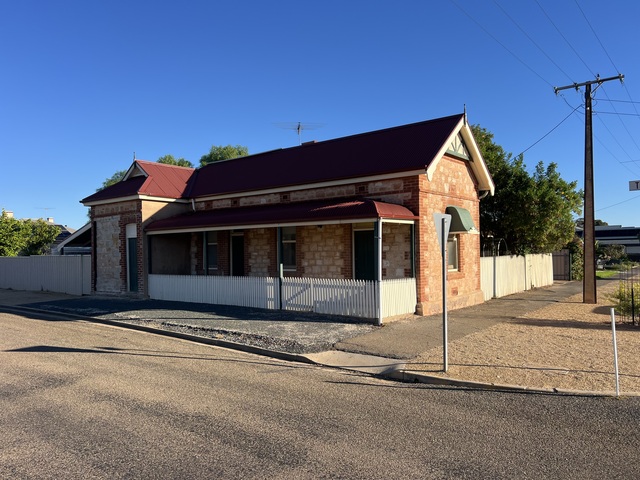
The McLachlan House, Owen
This week I was tired of all the diesel disaster chatter, so I have decided to return to a time when this simply was not a problem, when farm equipment was still driven by horsepower, and all it needed to run was a bit of grass.
My sister has been researching the history of older buildings in Owen and happens to be writing about a house originally built for James McLachlan Jnr.
He, and his father, were heavily involved in politics. Given that we have just had an election, and with the Liberals not faring as well as they might have hoped, I thought it timely to remember some of our early political champions. I have borrowed a little from her work.
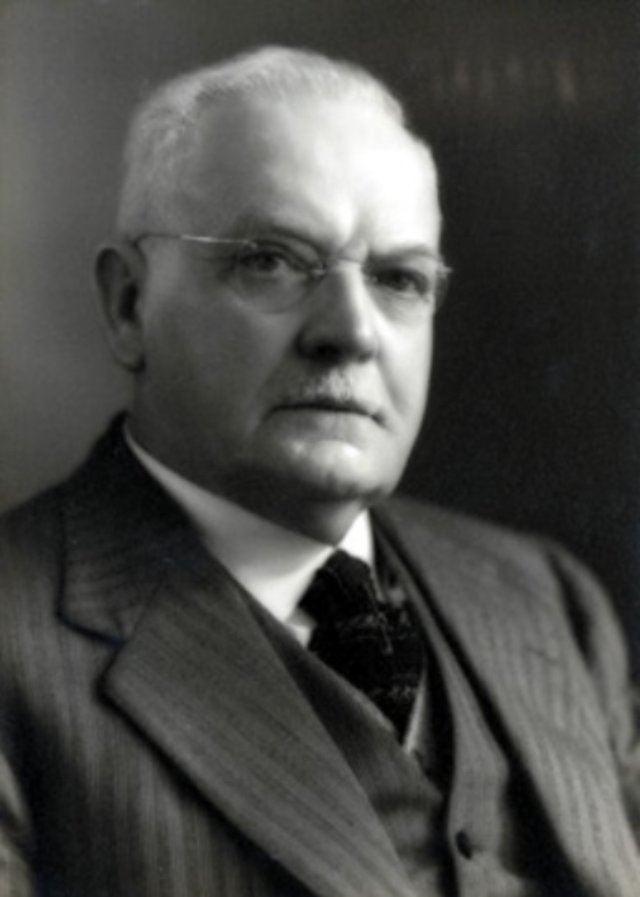
Just so you know who we are talking about, in James Jnr’s parliamentary biography he is described as: “Fairly thickset in build … in his prime his … striking gravitas was emphasised by a handlebar moustache that … was an undoubted triumph. … His speeches, methodical, logical and thoughtful, were salted occasionally with anecdote and pawky humour but delivered in the patriarchal tone of a man used to being listened to.” (I think I still like him).
But let’s start with his father, James McLachlan Snr (1842–1904). He was one of the pioneer settlers of Owen, taking up farmland in the Alma area (Dalkeith Farm) after emigrating from Scotland with his wife, Catherine (1843–1871), who died within a year of their first child, James Jnr, being born (both Catherine and James Snr are buried in the Alma cemetery).
A photograph of James Snr, with a hell of a moustache, which his son clearly inherited, graces a wall in the Supper Room of the Owen Town Hall. He was a man devoted to his community and his church (Church of Christ), and unafraid of public speaking.
From 1878, he served as a councillor for the Dalkey District Council for 14 years, including eight years as chairman. The Dalkey District Council was the forerunner to Owen District Council, then Wakefield District Council, and now the Wakefield Regional Council.
He was also president of the local branch of the South Australian Farmers’ Co-operative Union (1889–91). After stepping down, he became a member of the House of Assembly for the District of Wooroora (yes, that is where the local bowls association gets its name!), serving for nine years (1893–1902). And yes, James Snr did find love again, remarrying Fanny Cope, who bore him three daughters.
Now let’s move on to James Jnr (1871–1956). Heavily influenced by his father, he spent most of his adult life in state and federal politics, championing improved conditions for farmers and pastoralists.
After finishing his schooling (Alma Public School, then Whinham College), James Jnr returned to the family farm and, in 1894, married Ellen Jury of Magill. In 1895, he was appointed clerk of the Dalkey Council, a position he held until 1914.
He was also a founding member of the Owen Institute and chief magistrate of the district.
In 1902, during a run of crippling drought years, James and Ellen gave up farming and moved into town (James Snr died in 1904).
For a few years they ran the Owen General Store until 1907, when James became a stock agent and auctioneer with Bagot, Shakes and Lewis (later acquired by Goldsbrough Mort & Co).
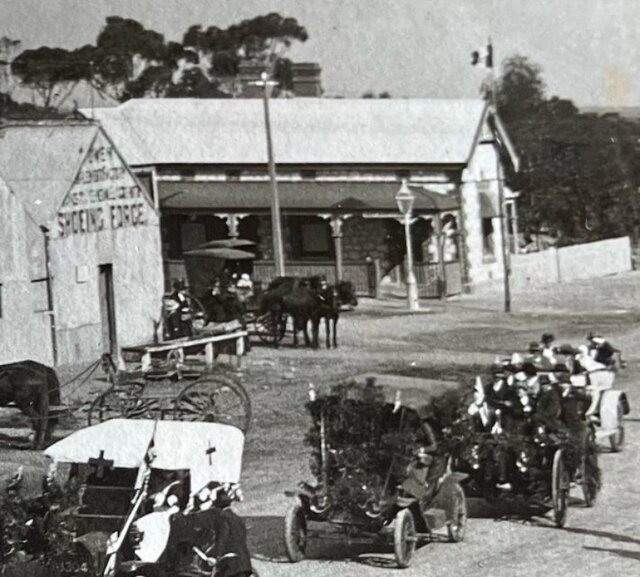
Around this time, James and Ellen built a lovely limestone home (c. 1911) on the corner of Main and Third Streets in Owen, with James using one of the rooms as his office.
At that time, Dalkey was one of the largest wheat-growing districts in the state. James soon became a highly successful agent and auctioneer. Goldsbrough Mort & Co wanted him to manage their head office, so the family moved to Adelaide in 1914.
Within two years, he became their chief auctioneer at the Metropolitan Abattoirs. But politics ran deep in the McLachlan blood, and he soon entered state parliament in 1918 via the seat of Wooroora, easily defeating seven other candidates.
In 1919, he told the House of Assembly: “The farmers of this State are … the backbone of the country. They want more roads and better roads; they want our water schemes extended; they want at least reasonable educational facilities; more help for their country institutes; and more assistance in building local hospitals.”
He resigned in 1930 and entered federal politics via the Senate in 1934, where he remained until 30 June, 1947, retiring when his term expired.
McLachlan had remained determined to secure the best outcomes for Australia’s wheat farmers and was a persistent advocate for rural industries throughout his parliamentary career.
James McLachlan died at his home in Kensington on 1 December, 1956. Not a bad innings for a bloke who started out on a patch of dirt near Alma.
Judging by that description handlebar moustache and all I get the feeling he would still have a fair bit to say if he were standing on the steps of Parliament today.
A different era, different politics but the issues do not sound all that unfamiliar: roads, water, education, health… and farmers still asking for a fair go. Some things change; others, it seems, just keep coming around.