
Just in case farmers have any cash left in their accounts, here is yet another cost to put in their budget.
The season is shaping up as one that will involve higher than usual numbers of mice. Unless this is dealt with at seeding, the cost will be high.
Growers will need to ensure they monitor their paddocks prior to, and at, seeding. If activity is present, baiting should begin immediately, because mice are particularly fond of freshly planted expensive seed.
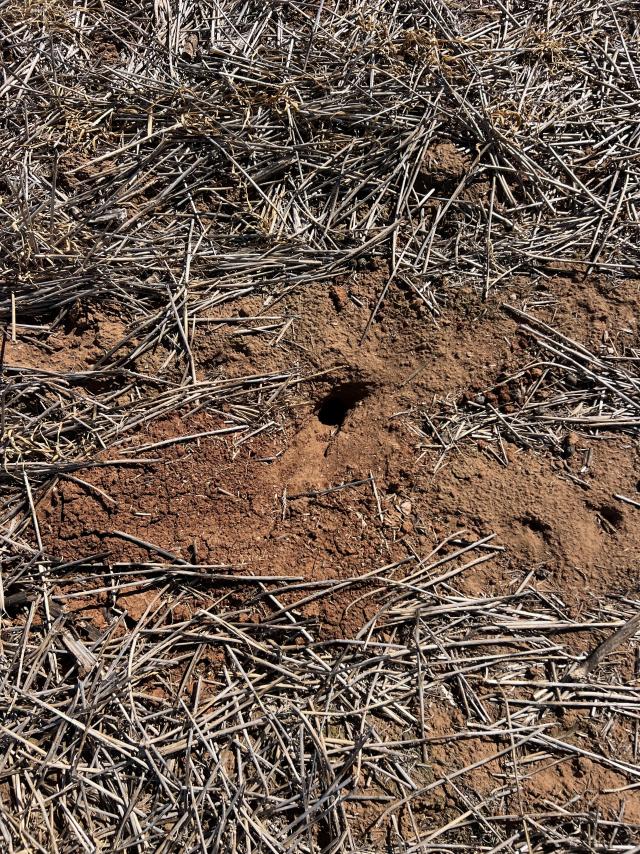
Farmers, get out in your paddocks now to check for signs of activity, particularly active burrows. Even two or three active burrows per 100 square metres is considered a warning sign before sowing.
With canola seed up to $65.00/kg, being sown at 2-2.25kg/ha, that is expensive feed for mice!
Dry sowing also leaves your seed vulnerable for longer, remaining an easy meal for mice. Once mice have worked out their food source, a convenient straight line, they can decimate a sown crop quite quickly.
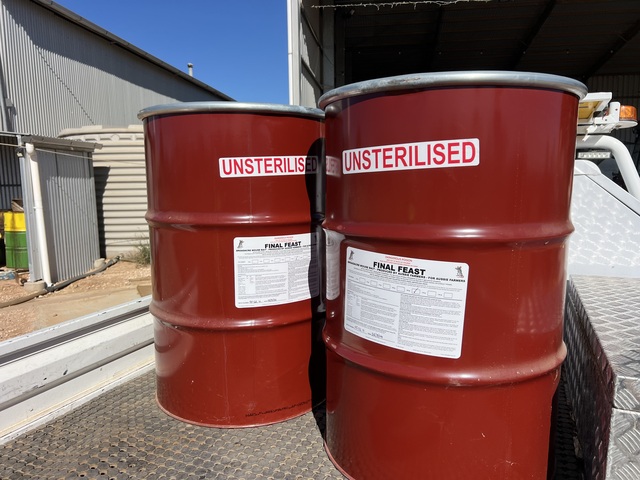
There are various mouse baits available in sterilised and non-sterilised formats. Grain Research and Development Corporation’s key mice management recommendations for growers include:
1. Actively gauge mouse numbers by walking through paddocks. Use mouse chew cards and active burrow counts to gauge mouse presence and activity. Mouse chew cards can be ordered from GRDC on 1800 11 00 44.
2. If mice are present at sowing, bait at, or as soon as possible after, sowing to prevent damage to the freshly sown crop.
3. Talk to bait suppliers early to ensure timely supply. As with use of any agricultural chemical, use the product in accordance with the label and report any adverse or off target effects via the APVMA website.
Growers should be aware that only baits containing 25 g/kg zinc phosphide (ZnP) are currently registered for use by the APVMA.
‘Green Bridge’ provides perfect breeding ground for aphids
– Source: SARDI pest facts newsletter
Recent seasonal conditions, particularly high rainfall across parts of South Australia, are supporting the growth of green bridge, increasing the risk of early-season caterpillars and moths building up on weeds.
‘Green bridge’ refers to weeds and crop volunteers (self-seeded plants) that host pests and diseases between growing seasons, allowing them to ‘bridge’ into new crops.
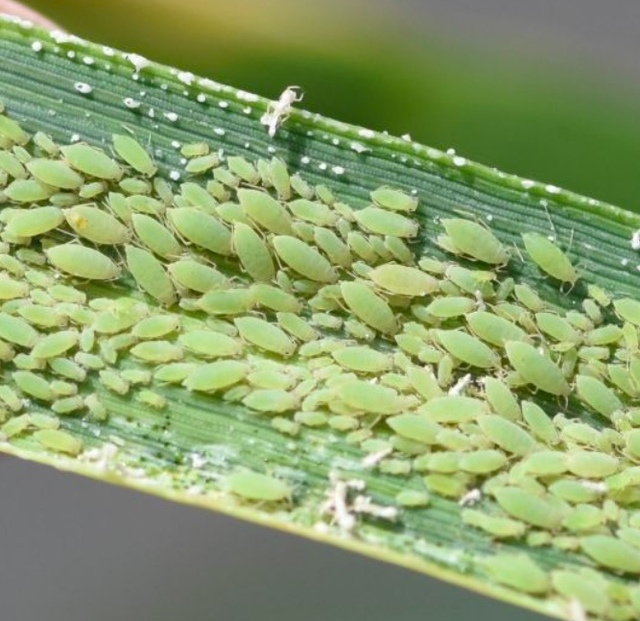
Several caterpillar and aphid species can establish on these weeds prior to sowing, which later moving into emerging crops. Key species to watch for include Russian wheat aphid, green peach aphid and diamondback moth.
Green peach aphid (Myzus persicae)
A key early-season pest for a range of horticultural and broadacre crops, with populations often building up on green bridge hosts such as volunteer canola and brassica weeds.
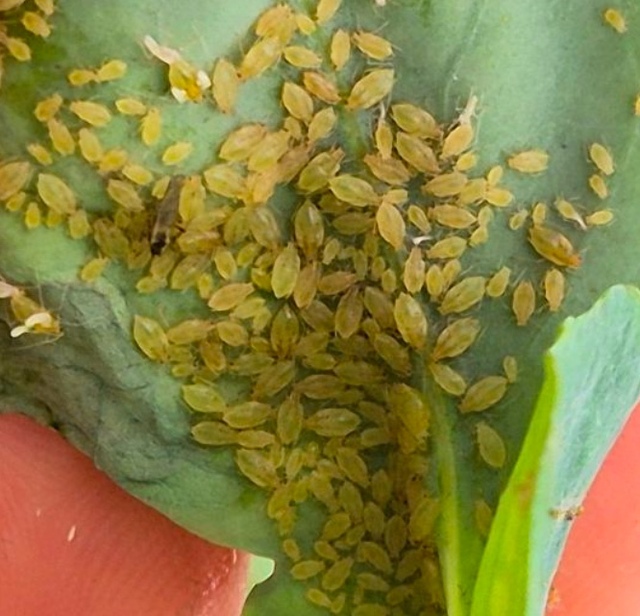
These aphids are small, soft-bodied and their body colour ranges from yellow, green, and orange to pink.
Feeding can cause direct damage through sap removal, leading to reduced vigour and plant stress, but the main risk is the transmission of turnip yellows virus (TuYV), which can result in significant yield loss.
Infestations can establish early and spread rapidly under mild conditions.
Green peach aphid has developed resistance to several insecticide groups, making early monitoring, correct identification and timely management critical, particularly at crop establishment.
Russian wheat aphid (Diuraphis noxia)
A notable pest of cereals, including wheat and barley, that can establish on grasses and volunteer cereals prior to crop emergence. Russian wheat aphids are small, light green and elongated, often found concealed within tightly rolled leaves.
Feeding causes characteristic symptoms including leaf rolling, white to purple streaking and reduced tillering, which can lead to significant yield loss under high pressure.
Infestations are often patchy and may be difficult to detect early due to their concealed feeding habit. There is greater risk of Russian wheat aphid when green bridge hosts are present, allowing populations to persist between seasons.
Early monitoring and control of volunteer cereals and grasses is important to reduce the risk of establishment.
UP IN THE AIR WITH PAUL TAYLOR
Fun tales of fantails
Autumn is a pleasant time of the year. Days are often calm and sunny, nights are cool, and all being well, there is some rain.
It is usually a quiet season for birds, with the spring and summer migrants having left for northern regions. But a few birds are autumn visitors to the Adelaide Plains. The grey fantail is one.
Although not abundant, there are a few about. Regular sites for grey fantails in the Balaklava area each year are near the hospital, the Rocks Reserve (two there last year), and also in coastal vegetation around Port Wakefield.
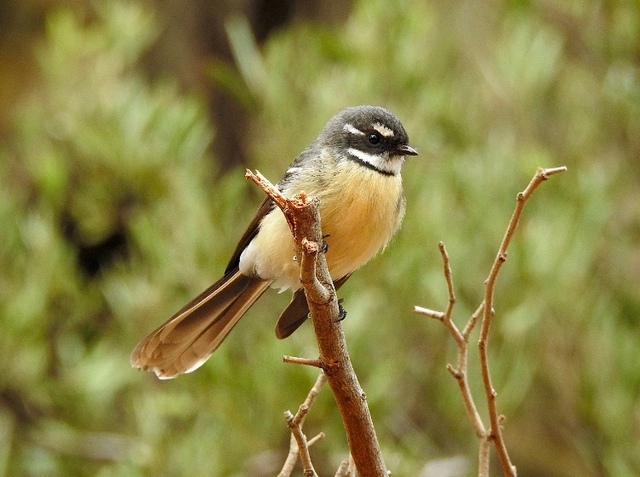
Grey fantails are lively and delightful birds. They are grey and white with a variable black breast band, and buffy underneath. The long tail is often spread in the shape of a fan.
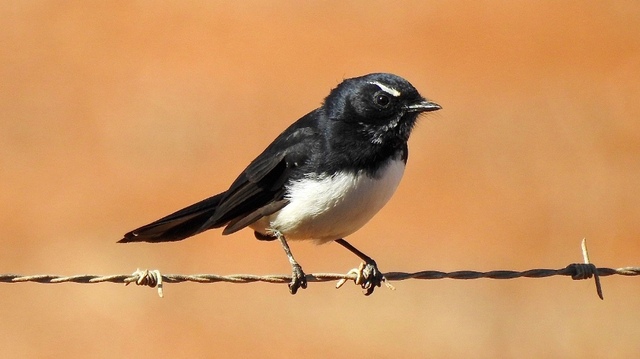
The grey fantail has a similar shape to the familiar willy wagtail, just slightly smaller. They are closely related; in fact, both are scientifically classified in the same genus.
Willy wagtail is a misleading name, as it is actually a kind of fantail. The original (and more accurate) name for willy wagtail in early days was black-and-white fantail. But now the official name is willy wagtail.
“True” wagtails are a different family of birds, and rare migrants to Australia (confusingly, there is one called a grey wagtail). Wagtails wag their tail up and down, while willy wagtails and grey fantails wag side to side.
Grey fantails are friendly and confiding. Always active, they often approach people.
They are found in the northern Adelaide Plains from about April to October. As far as I know, they are non-breeding visitors and do not nest in the local area.