
If Stones Could Talk
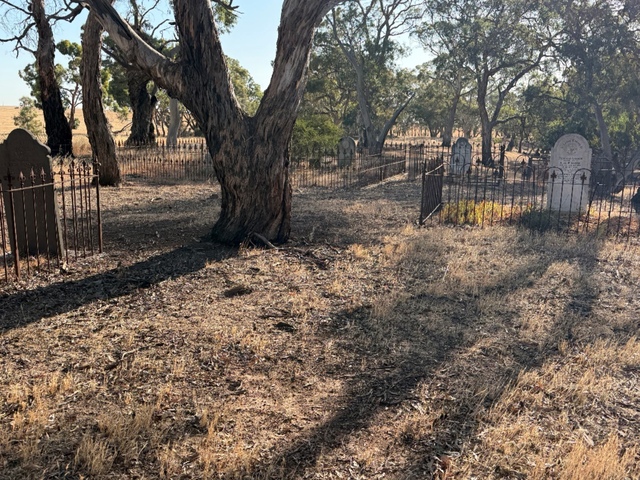
I was driving from Eudunda to Riverton last week via Marrabel when I spotted a small, lonely cemetery on the side of the road.
I gave local farmer Matthew Greenslade a call and it turns out the cemetery adjoins his property and is known as the Ettrick Cemetery, which is also the name of the Greenslade family farm.
The small community of Ettrick was established more than 150 years ago, and vanished just 13 years later.
Ettrick church and cemetery
Situated six kilometres east of Riverton, Ettrick was once a meeting point for the local Presbyterian community. In 1864, a church was built with records showing an attendance of 160 worshippers and a Sunday School with 30 children and four teachers.
The church was used for only a decade. A declining population, the construction of other churches, and the railway coming to Riverton contributed to the church’s closure in 1877.
The church was then dismantled and moved to Jamestown, it was an era when nothing was wasted. The small cemetery is all that remains.
As was the fashion of the Victorian era, each grave is surrounded by a wrought iron fence, which apparently ward off evil spirits and prevent the dead from leaving. The fences also protect the graves from vermin.
Several kilometres further on is Peters Hill where there was a small community which included a local school. Matthew’s father John Greenslade was one of the last students at the school when it closed in 1950.
Polar Opposites
Saskatchewan farmer and Nuffield Scholarship recipient Cherilyn Jolly-Nagel boarded her flight from Canada to South Australia on Australia Day last week.
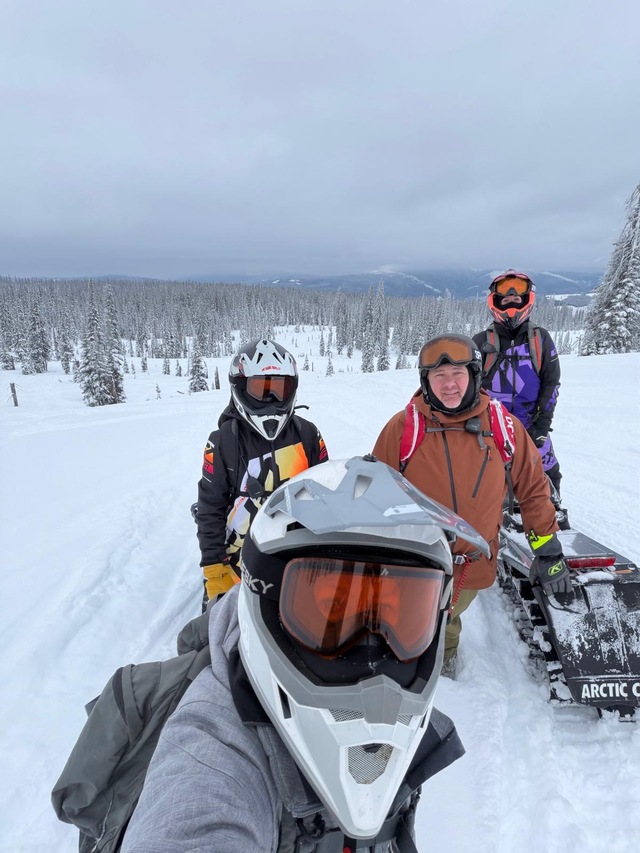
The temperature was a freezing -50°C. Just 30 hours later, she arrived in Adelaide to a scorching 46°C.
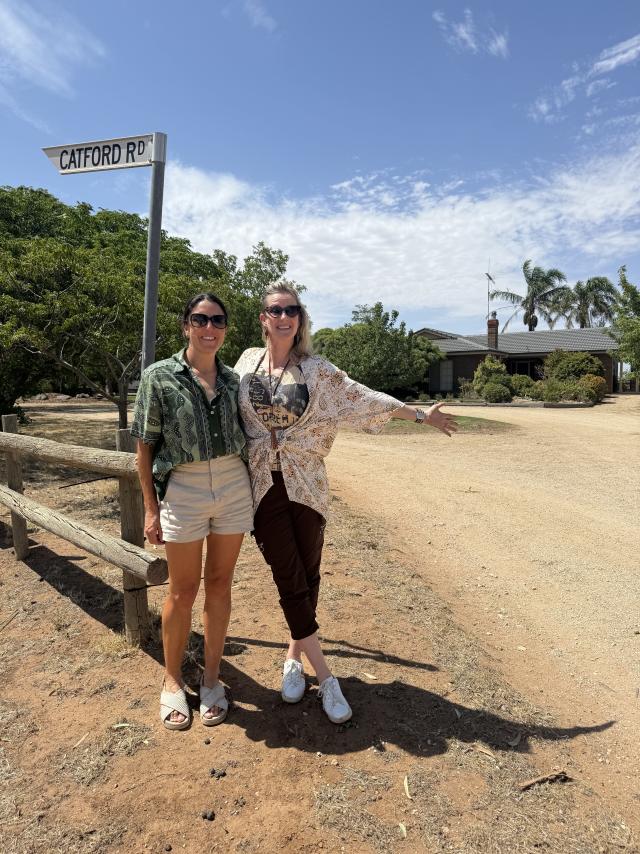
Cherilyn was met at the airport by her hosts Claire and Dillon Catford and their children Harley, Bill and Annie. They had all met last year through the scholarship programme.
A grain producer, Cherilyn grows canola, lentils and durum wheat in Canada. Cherilyn’s Nuffield research focuses on the impact of renewable energy, particularly wind turbines, on productive farming land.
She is studying renewable energy infrastructure from the farmer’s perspective, with an emphasis on whether existing policy frameworks provide landowners with the information they need to make informed, long-term land management decisions.
Agriculture is central to Canada’s economy and identity, yet increasing competition for land, driven in part by the global push for sustainability, has heightened the importance of land-use planning.
While renewable energy development on farmland presents opportunities, it also raises concerns about food production, export capacity and long-term productivity.
A balanced approach is needed, one that supports affordable, low-emissions energy while protecting productive agricultural land.
Key questions include how collaboration can improve land-use outcomes, whether renewable energy can diversify farm income and reduce risk, and what lessons Canada can learn from international experience.
It is an issue being debated worldwide, and one I will be watching with great interest as her research unfolds. Although this is not Cherilyn’s first visit to Australia (she worked on Neil Wandel’s farm in Western Australia 25 years ago), she notes more similarities than differences.
She recognises a strong kinship between Australian and Canadian farmers, shaped by shared global crop markets and many of the same rural challenges.
Though snow and -50°C mornings remain one problem South Australian farmers happily do without, Canadian farmers face agricultural climate challenges on a whole other level.
Once she thaws out (I expect that took around five minutes), Cherilyn’s goal is to meet new people and gain insights into Australia’s renewable energy industry.