While we wait for the elusive break, I thought it a good time to have a look at several problem weeds across South Australia.
Many growers have already made a start with their cropping programme, and seeding will ramp up over the next two weeks, as the possibility of a false break diminishes. Paul Taylor reckons he has the inside track and is tipping May 4.
Recent AI modelling suggests he could be on the money, so let’s lock in Star Wars Day: May the Fourth be with you.
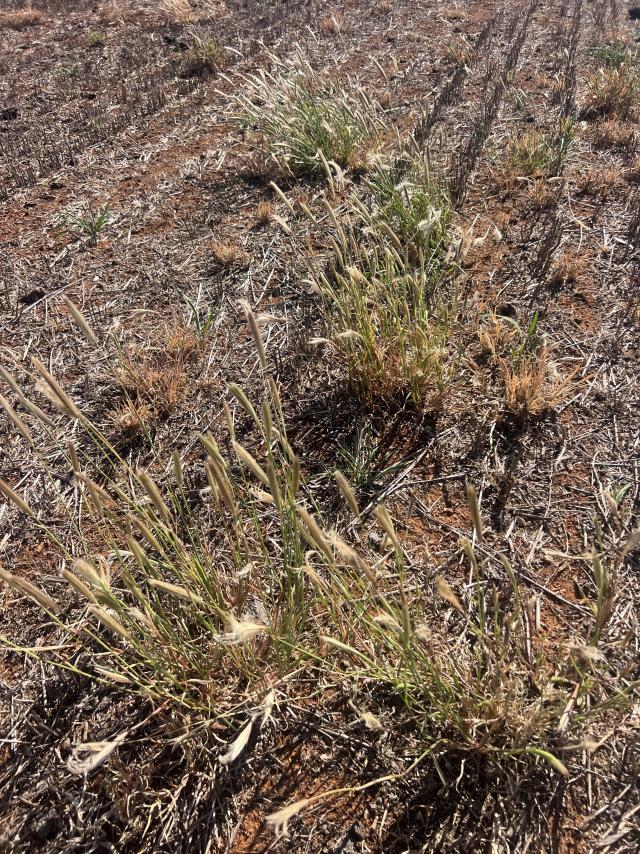
Feathertop Rhodes Grass
Feathertop Rhodes Grass is a highly invasive, glyphosate-tolerant, non-native weed originating from Africa, Asia and the Americas. It has become well-established in South Australia, spreading into paddocks via roadsides, machinery and wind.
It is well suited to no-till and minimum-till farming systems. A rapidly growing summer weed, it is spread has been accelerated by its relatively high resistance to glyphosate.
According to the latest information from GRDC, it is now prevalent in all states. It is often found on roadsides (there is there plenty on Traeger Road, south of Balaklava).
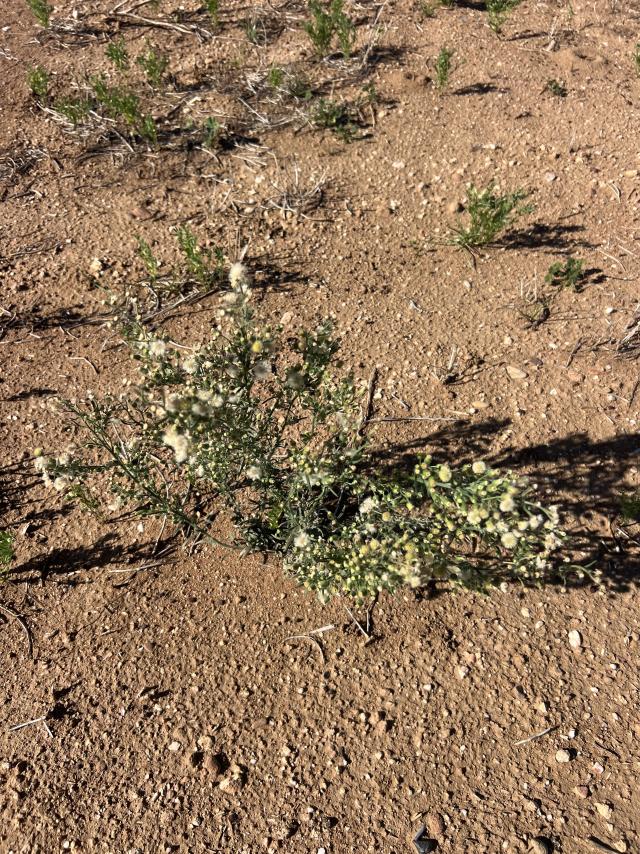
Flaxleaf Fleabane
Flaxleaf Fleabane plants feature a hairy leaf surface, which gives the plant a natural tolerance to herbicides. It can be found almost everywhere: paddocks, footpaths, roadsides and paved areas, from the coast to the north of South Australia.
Each plant can produce up to 110,000 seeds. It becomes semi-dormant or dies over winter.
Another major issue for farmers is its ability to tap into a substantial amount of subsoil moisture over summer, resulting in yield reductions in cropping situations. Chances are, if you have a look, it is in your backyard.
Like Feathertop Rhodes Grass, its resistance to multiple chemicals has allowed it to spread rapidly across every state in Australia.
Diesel Price Falling
Now that most farmers have managed to secure sufficient diesel to finish seeding, the price has dropped by about 90 cents over the past 10 days, as of Saturday.
Hopefully, the price continues to fall so growers are not forced to pay well above average come harvest. For those who managed to purchase at the peak of the market, at least you have fuel on hand.
If you also secured urea at its peak, perhaps you will manage to sell your grain at the peak as well making it three from three.
While frustrating, nailing your grain marketing will have a much bigger impact on your gross margin than either fuel or fertiliser pricing.
You canno’t produce a crop without either of these inputs, so it is worth keeping a close eye on the markets.