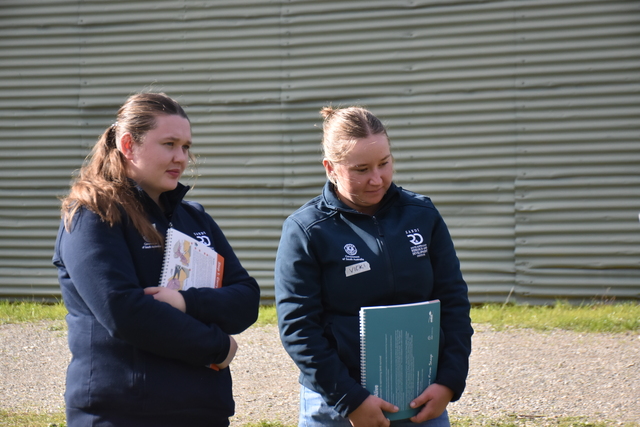
Livestock producers were given the opportunity to further their knowledge and understanding at a pair of Mid North workshops.
Livestock SA delivered two lamb survival workshops from 10-11 June at Melrose and Clare, designed to equip producers with practical skills to improve animal health, productivity and on-farm decision-making.
Talking Livestock consultant Deb Scammell delivered a session exploring the factors producers can improve as far as management practices to improve lamb survival.
“I guess with the dollar value for every lamb you can keep alive, there’s a lot of interest in, especially with multiple born twins, keeping more of them alive,” she said.
“I went through birth weights, and paddock selection and mineral nutrition, looking at those practical factors to keep them alive.”
Veterinarian Dr Jack Coffey ran a post-mortem session allowing participants to bring in their own lambs to run-through how producers can identify issues and make adjustments.
“Being able to bring in their own lambs was really useful, because on-farm, you can work out which factors are potentially limiting you the most and then make a plan to improve what you’re doing before next year,” Ms Scammell said.
Clare participant Michael Newcombe said it was a beneficial workshop, with informative sessions from Ms Scammell and Dr Coffey.
“We’ve been very lucky with the weather and the rain at the right time this year,” he said.
“Lambing has been excellent compared to the last couple of years and I suppose having that increase throws a few challenges your way.
“We have changed a few management things this year, it was the first time we’ve scanned, and we’ve definitely got more lambs on the ground.”
Ms Scammell said with extra rain and grass around which has made it easier for producers compared to the last few years.
“We’re almost at the stage in most of the Mid North that we’re able to lamb just on grass, so when you look at issues like mismothering, it’s been a lot easier to manage because ewes have stayed with lambs on the birth site given there is pasture around,” she said.
“Discussion-wise, it’s been a relatively smooth lambing, mortality has been way down, and percentages have been higher and realistically, because of the nice start to the season and grass at the birth site, those things have made a massive difference everywhere.”
Livestock SA project officer Tanya Dobrijevic said Livestock SA was focused on supporting members with on-ground knowledge and tools that made a real difference.
“Whether that’s understanding lamb losses, improving nutrition, or making more informed management decisions,” she said.
“Bringing producers together with industry experts in a hands-on setting helps build confidence, strengthen decision-making and ultimately drive better productivity outcomes on farm.”