
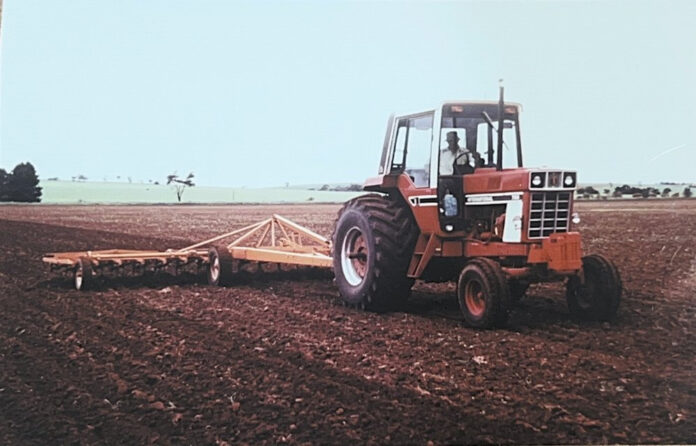
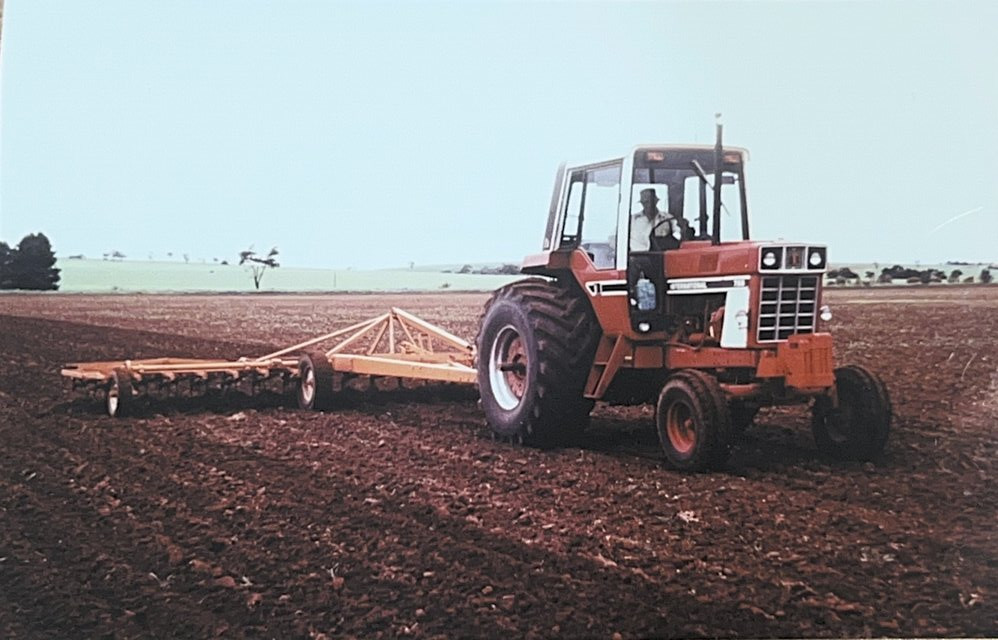
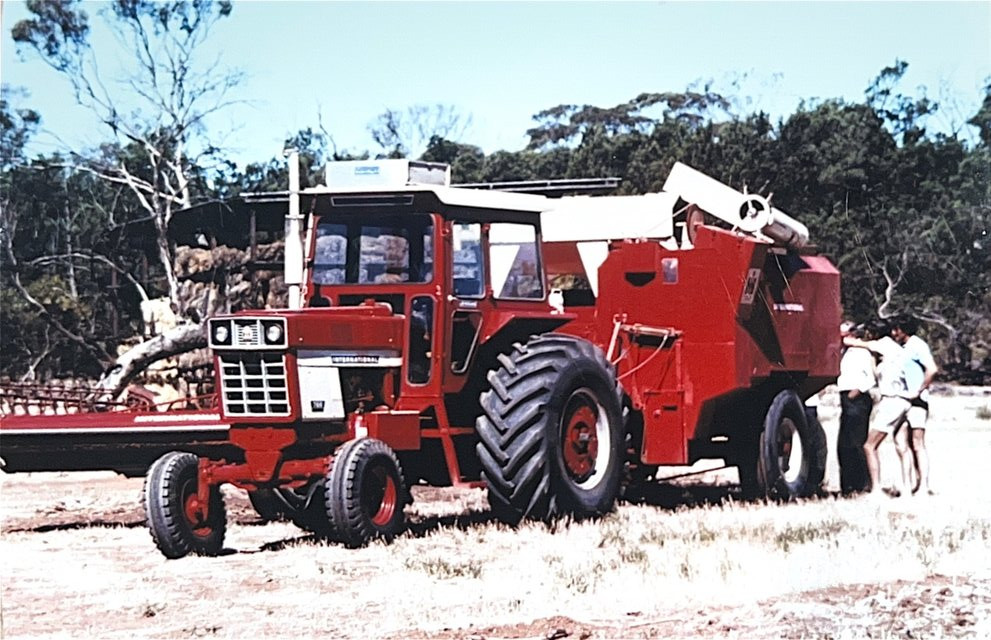
In 1985, as a 20-year-old, I must have given this speech at a Rural Youth event. Some has aged well. Some has not.
The topic for my talk is the very real problem of rapidly increasing farm costs, in relation to farm income. I have chosen this well-worn subject to demonstrate the farmer’s plight in our current economic climate. I have collated some interesting figures on costs and income to illustrate our dire situation.
I’ve gone back 15 years and compared 1970 costs and prices, to those of 1980 and then to 1985. Then I have looked forward 15 years to the year 2000, using as a guide the percent increases that have occurred during the last 15 years.
Selecting wheat as a base income product, we find that in 1970 the gross value was $46 a tonne in 1980 it was $155 and in 1985 still $155. An increase of 331 per cent.
Projecting this forward to the year 2000, gross value will be $513 a tonne. Now using diesel as a base cost product: In 1970 it was 7.5 cents a litre.
In 1980, 27 cents, and in 1985, 42 cents a litre – a 560% increase. Carrying this forward to the year 2000, diesel will cost $2.35 a litre.
Another way of looking at the escalating cost is this: In 1970, the value of a tonne of wheat bought 2.8 tonnes of superphosphate. In 1985, it buys 1.3 tonnes, and in 2000 one tonne of wheat is expected to buy just 0.6 of a tonne of superphosphate.
Alternatively, 1.0 tonne of superphosphate will buy 1.5 tonnes of wheat.
Another example is this: The value of one dozen eggs bought 6.6 stamps in 1970. And in 1985, it bought only 2.8 stamps, By the year 2000, one dozen eggs will buy just 1.2 stamps, or in other words you will need four dozen eggs to buy five stamps.
It is interesting to note that the average increase in cost over 30 cost items associated with farming was 460 per cent. Meanwhile, the average farm income increase from saleable farm commodities was only 314 per cent, or 146 per cent in favour of farm costs.
In conclusion I believe the solution to this is very simple, and that is an immediate price and wage freeze for a period of at least five years, preferably 10 years, thus allowing Australia to once again be competitive on the World Market. Thank you.
Now let’s jump forward 40 years to today’s costs.
Diesel is currently at around $2.30, a 450 per cent increase over 40 years. It did hit $3.30, which was a 685 per cent increase.
Wheat is currently selling at $317 per tonne, which is a 105 per cent increase over 40 years. For fertiliser, I am using 24 per cent nitrogen/16 per cent potassium fertiliser, to compare with superphosphate.
Currently 24-16 fertiliser is $1186 per tonne, around a 490 per cent increase from 1985 at $201.50.
My maths says that today, one tonne of 24/16 will buy you 3.74 tonnes of wheat, or one tonne of wheat buys you 0.267 tonnes of 24/16. This season, urea is between $1200 and $1450 a tonne compared to 1985 when it was $260 per tonne, which equates to a 460 per cent increase.
Now to the eggs and the stamps. I had to look this up. Rhodes free range eggs are around $9 a dozen and a stamp costs $1.70, so today, one dozen eggs buys you 5.3 stamps.
Stamps have increased 500%. Interestingly, this has not changed much over 40 years, but when did you last buy a stamp?
In summary, current pricing is historically low. Using input costs, wheat should be at a minimum of $852, which is just 490 per cent more.
Land pricing in 1985 was about $200 per acre. Today, land in the same area is around 4900 per cent more per acre, which in anyone’s head is hard to comprehend.