
When the topic of domestic violence is discussed, the issue of financial security – or the lack thereof – is often overlooked. Coercive financial control has been highlighted in recent years as a major destructive part of domestic violence which often results in victims being left in situations of financial ruin. It also contributes to the increasing homelessness crisis.
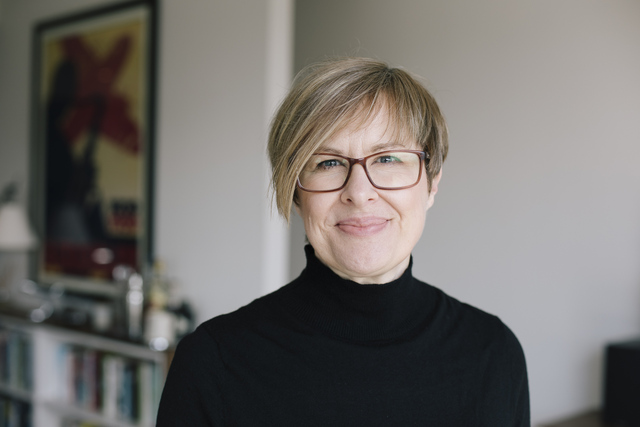
Rebecca Glenn, Founder at Centre Women’s Economic Safety, is dedicated to reversing the increase of coercive financial control for women in Australia
The Centre for Women’s Economic Safety (CWES) is a registered charity that supports women experiencing economic abuse in the context of domestic and family violence and works to reduce its impact.
Rebecca started the organisation because she could see there was a huge problem without a commensurate-sized response.
“Economic abuse was not well understood in this country, and even among those that did understand it, there wasn’t the knowledge about financial safety and remedies that women needed,” Rebecca said.
“More than one in six women in Australia have experienced economic abuse from an intimate partner and we know many more women have experienced economic abuse from a family member, carer or other household member, so it is highly prevalent.”
Coercive financial control is an abuse that has a far reaching impact on both the victims and community alike. Government, financial institutions and support groups are attempting to unravel these affects and collectively create solutions moving forward.
“The consequences of economic abuse are profound impacting physical and mental health, employment, housing, credit reports, the wellbeing of children, and of course financial wellbeing,” Rebecca said.
“Unfortunately, the consequences often snowball, so life becomes extremely difficult. With support and early intervention, we can reduce the burden women experience and increase their options.”
Understanding economic abuse is important as many victims of domestic abuse have been unaware of what it is and how it is done.
In particular when victims find themselves in the family court, the coercive financial control has often already created the long term damage for them.
“Economic abuse is a key component of coercive control and present in the almost all cases of domestic and family violence,” Rebecca said.
“People using abuse work to take control of financial and economic resources to make it incredibly difficult for the survivor to be self sufficient.
”Most tactics of economic abuse fall into one of three main categories: Restriction, such as preventing access to money and bank accounts; Exploitation, such as coercively or fraudulently taking out loans in another person’s name; and Sabotage, such as undermining someone’s employment, for instance by constantly calling them at work.”
Unravelling the damage once victims are in the family court system is something that may not result in a reversal of financial abuse.
”Unfortunately, economic abuse tends to escalate post-separation with family law and child support systems inadvertently facilitating the ongoing abuse,” Rebecca said.
”Staying safe and participating in society is virtually impossible without money and so the control of money and other economic resources is a particularly effective way of gaining power and control over a partner or family member.”
Women in regional communities who are experiencing, or have experienced domestic violence, have limited access to support and resources to assist them.
The CWES is working towards changing that. As an Australian organisation, the CWES is well aware of the extra challenges for women in regional communities and are creating information, education and support resources for these women.
”We partnered with Insight Exchange to develop some resources for people to better understand economic abuse and be more prepared to respond,” Rebecca said.
”These include a free 23-minute training video, Introduction to Economic Abuse, and a guide for organisations thinking about their response to economic abuse, Support My Economic Safety.”
Acknowledging women in regional communities often have a different set of family violence circumstances, Rebecca and the CWES have a strong focus on better supporting and protecting these vulnerable women.
”Living in smaller towns and rural and regional areas presents additional challenges to survivors of domestic and family violence and economic abuse,” Rebecca said.
”When everyone knows each other and there are likely to be divided loyalties, it is often not safe for survivors to seek help in their local area or disclose to anyone locally.
”There are also issues with mobile phone reception and internet service. On top of that, regional Australia is not as well served by support services, and bank branches are becoming more and more scarce outside of metropolitan Australia.
”It’s important that there are options for women to access support virtually and in adjacent areas without applying strict geographic eligibility criteria to ensure equity.”
Women experiencing, or who have experienced, domestic violence are able to access many CWES services for free.
”CWES Money Clinics provide free, phone or online appointments to women experiencing economic abuse. Our female financial abuse specialists can assist with financial safety planning, financial counselling and any other finance-related questions people might have,” Rebecca said.
”Importantly we do not apply any eligibility criteria; so there is no income or assets test, no geographic restrictions or Visa or residency requirements.
”The only eligibility criteria is being a woman, non-binary or feminine-identifying person in Australia experiencing family violence. The website is cwes.org.au/money-clinics (site includes quick exit button).”
Coercive financial control, as a part of domestic violence, is an area that requires a wholistic approach by all community stakeholders to bring about an end and contribute to a better future for women in Australia.
”The Financial Safety website is designed for people concerned about finances in their relationship or concerned about someone they know,” Rebecca said.
”It includes information about finances through a lens of family violence and include a national directory of services, and a range of other tools and guides that may support someone’s information gathering, planning and support seeking.”
If you or anyone you know, is experiencing domestic violence or issues relating to coercive financial control, there is help available. CWES also published a Financial Safety Checklist in eight languages on its website.