Widespread showers and heavy rain have set up the season for farmers across the district.
It is the best start for many in about three years. With the high input costs this year, growers are hopeful for at least an average season.
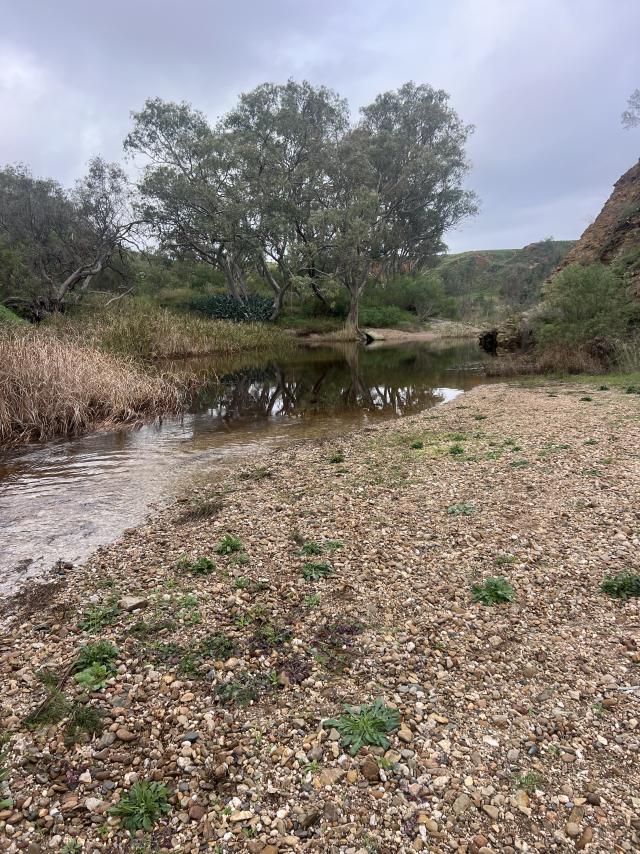
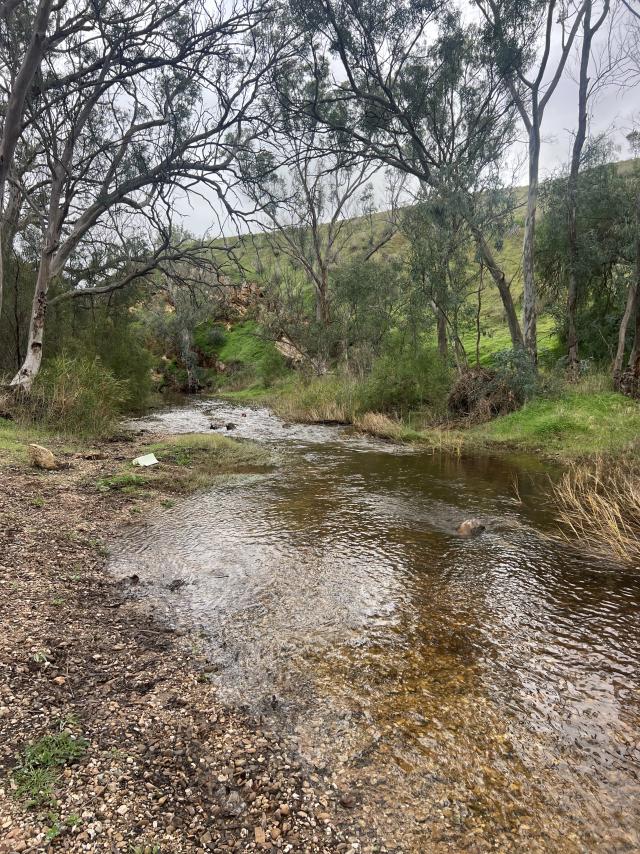
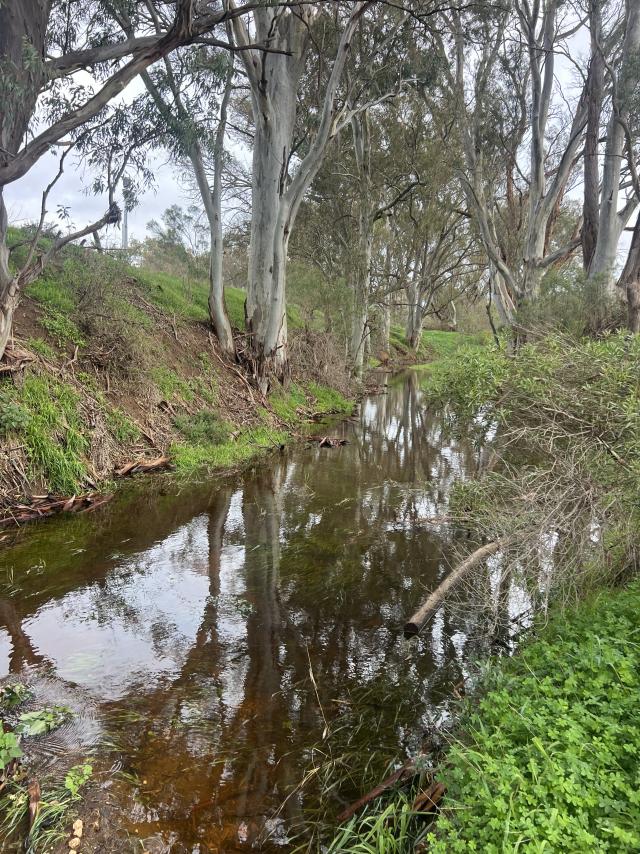
Rocks Reserve watch: On Friday the River Wakefield at the Rocks Reserve was flowing well and had reached Whiting’s Ford. It may have made it to Balaklava over the weekend.
In a weather phenomenon spoken of by a few of the old timers, the highest rainfall recordings in the region often fall along the Wakefield River.
This year, Undalya (near the head of the river) and Balaklava have recorded 100mm (4” in the old money). Much of the higher rainfall recordings did in fact follow the Wakefield this time around.
Rainfall Recordings for the month of June to date (mm):
Bill Hean (Auburn) – 50
Peter Glyn (Salter Springs) – 86
Glen Bubner (Alma) – 53
Glen Bubner (Salter Springs) – 62
Rob Saint (Erith) – 88
Andrew Parker (Ridgeway) – 42
Wayne Molineux (Tarlee) – 44
Brian Parker (Owen) – 51
Andrew Parkinson (Riverton) – 75
Patrick Reddden (Clare) – 47
Steve Schiller (Gomersal) – 43
Callum March (Balaklava) – 104
Shaun Nottle (Lochiel) – 22-36
Richard Konzag (Mallala) – 33
Gary Zweck (Blyth) – 30
Nick May (Balaklava) – 72
Nine Mile – 57
Jon Harkness (Owen) – 42
Wayne Heaslip (Grace Plains) – 46
Gaye Kuerschner (Black Rock) – 11
Trevor Day (Kapunda) – 45
Michael Day (Days Hill) – 73
Laura – 34
Orroroo – 17
Quorn – 14
Melrose – 31
Undalya – 100
Balaklava High School – 93
Bigg (Snowtown) – 25
Catford (Nantawarra) – 19
Crawford (Georgetown) – 45
Rackham (Redhill) – 32
Point Pass – 31
Weckert (Brinkworth) – 51
Wild Horse Plains – 28
Pinkerton Plains – 35
Hamley Bridge – 54
Halbury – 88
Jamestown – 36
Korunye – 27
Mundoora – 32
Mintaro – 41
Farrell Flat – 33
Kybunga – 38
Paraquat back in the media
Recently, Paraquat has resurfaced in the mainstream media, first appearing in social media feeds before being picked up by mainstream outlets. The question being raised is whether there should be a ban or further restrictions.
What is Paraquat? It is a highly effective, non-selective and fast-acting herbicide widely used in agriculture.
It destroys green plant tissue on contact by disrupting photosynthesis. It is extremely toxic to humans and is classified as a restricted-use chemical, requiring specialised training and strict handling procedures.
Paraquat is also a key tool in managing herbicide resistance to other chemicals, such as glyphosate. It provides farmers with the ability to desiccate resistant weed populations that survive glyphosate.
Farmers generally use this chemical within a closed-loop system, meaning it is pumped directly into the boom spray with minimal handling. Full personal protective equipment is required during mixing and preparation.
Paraquat is banned in many countries, but it is important to understand the context. Many of these countries have different agricultural systems, population densities, regulatory environments, or risk-management capabilities.
It is not banned in the USA or Canada. It is also not widely used on golf courses or by councils, as is sometimes reported.
Paraquat is primarily a broadacre agricultural chemical and remains an important tool for managing herbicide resistance across Australian cropping systems.
Do not be taken in by the hype. Farmers take great care when using this chemical.
It is currently under review by the Australian Pesticides and Veterinary Medicines Authority, and there is debate about whether Australia should follow regulatory approaches used in regions such as the EU, which operate under very different agricultural conditions.
Farmers are constantly faced with additional restrictions from groups that often have limited understanding of the complexities involved in modern agriculture.
In a perfect world, there would be no need for agricultural chemicals, but producing enough food for a growing population requires practical solutions.
Over the past few years, herbicides have played a significant role in maintaining crop production. They enable minimum-tillage farming systems, which reduce soil disturbance, lower fuel use, and improve water-use efficiency.
There are many substances that carry health risks. Tobacco and alcohol, for example, have been linked to numerous diseases and health issues, yet society continues to manage their use rather than ban them outright.
Farming is hard, stressful and challenging work. It can sometimes feel as though different groups are making the job harder, more expensive and less productive, driven by an idealised view of agriculture that does not always account for the realities of producing food.