
Six weeks ago, I ordered 5000 litres of diesel to complete seeding. After finishing, I ordered another 5000 litres.
The difference in price between the two deliveries is worth noting. The first delivery cost $1.42 per litre more than the second.
My saving on the recent order amounted to about $7000. The price drop is welcome, but it raises the obvious question: what changed?
Who benefited from the inflated oil price? It certainly was not the resellers.
The last time I checked, the Strait of Hormuz remained effectively closed, with only about 10 per cent of normal shipping traffic willing to pass through this area.
If the factors that supposedly drove prices higher have not substantially changed, why have diesel prices fallen so dramatically in just six weeks?
Just how much is a trillion?
Some financial statistics are worth putting into perspective.
In 1991, following the State Bank collapse, South Australia’s debt stood at $3.15 billion. Adjusted for inflation, that equates to roughly $8.5 billion today.
Yet the state’s current debt is about $53 billion.
To appreciate the scale of these numbers, consider this: if you counted continuously, day and night, without stopping to sleep, it would take 31 years to count to one billion. To count to one trillion would take 31,709 years.
The Federal Government’s debt is approaching $1 trillion. Add the debts of the states and territories, and the total climbs to around $1.62 trillion.
Even more remarkable than these hard-to-wrap-your-head-around figures is that it has taken just 20 years for Australian governments to move from effectively no net debt to where we are today.
Spreading white gold!
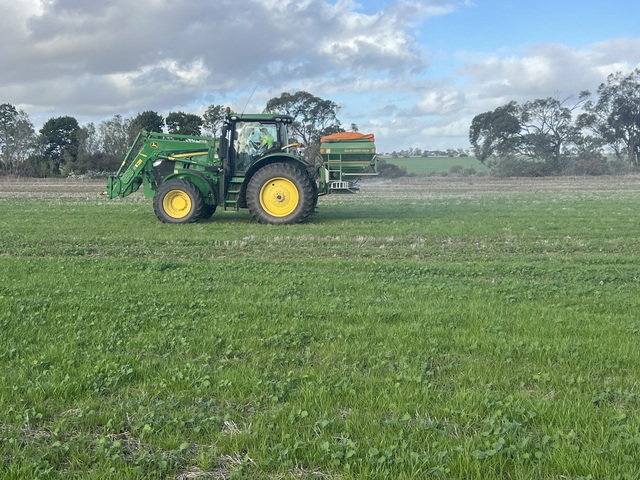
There was a flurry of activity across the district late last week as farmers headed out to apply their first round of nitrogen fertiliser (urea).
With rain forecast, growers were hoping for a useful fall early this week after the unseasonably warm conditions experienced on Thursday and Friday.
The stakes are particularly high this year, with most farmers paying about 80 per cent more for fertiliser than was available earlier in the season (before Trump decided to attack Iran).
Urea, often referred to as “white gold” by growers, was selling for around $800 a tonne in early February. By the end of March, the price had surged to $1450 a tonne.
Without adequate nitrogen, crops across Australia lose significant yield potential. However, there may be some opportunity to recover a portion of last year’s unused fertiliser investment.
Following the poor 2025 season, residual nitrogen remains in many paddocks and can potentially be “mined” by this year’s crop. Even so, many growers will be reducing their urea application and keeping a close eye on grain prices to make the numbers stack up.
As always, the final result will depend on rainfall, grain markets and a degree of luck that no amount of fertiliser can guarantee.
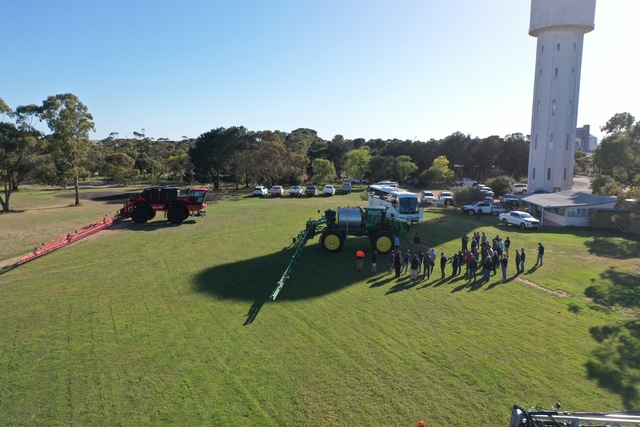
What Procedures Are Involved in Spraying a Crop?
Being responsible for spraying a crop is a lot like being a sous chef, you need to get the ingredients exactly right. If you do not, you could wipe out the income from that paddock for the entire season.
Today’s selective herbicides are very clever, but they must be applied to the correct crop. This also means that when changing from cereals to a legume or broadleaf crop, hygiene is critical.
If you do not do the dishes properly, you are likely to damage the next crop you pull into. That is why thorough decontamination of your boomspray is so important.
Now to the recipe. Your agronomist will usually provide a list of ingredients designed to achieve the best results, but accurate measurement is essential.
Get the rates wrong and the spray may fail to control the target weeds, or worse still, damage your crop. Just like baking a cake, forget a key ingredient or accidentally double up on one, and the result is unlikely to be what you intended.
The other challenge is cost. Herbicide applications are expensive, so farmers spend a lot of time checking rates, paddock areas and product quantities.
Most will work out the figures in their head first, before reaching for the calculator to double-check. It turns out those times tables really are important after all.
One final thing: mistakes can happen, so never approach or distract someone while they are mixing a spray tank. A moment’s loss of concentration can be very costly.